
Building a resilient financial portfolio requires a foundational understanding of market mechanics, and key to this process is knowing how different investments behave under varying market conditions. For both novice and experienced investors, grouping financial instruments into distinct asset classes provides a structured framework for managing risk and pursuing long-term financial goals. An asset class represents a group of financial instruments that exhibit similar financial characteristics, behave comparably in the marketplace, and are subject to the same laws and regulations.
By categorizing investments into distinct buckets—such as equities, fixed income, cash equivalents, and alternative assets—investors can systematically construct portfolios tailored to their specific risk tolerance, time horizon, and objectives. Rather than placing capital into individual securities haphazardly, evaluating the broad characteristics of each investment category enables strategic portfolio construction known as asset allocation.
Defining Core Asset Classes and Their Characteristics
To navigate financial markets effectively, it is helpful to categorize investments based on their underlying structures, liquidity levels, and income-generating potential. Historically, financial markets recognized three main traditional categories: equities, fixed income, and cash. However, modern markets have expanded to include several alternative categories, offering investors broader choices for portfolio design.
Traditional Asset Classes
1. Equities (Stocks)
Equities represent equity ownership shares in publicly traded companies. When you purchase equity, you become a fractional owner of the underlying corporation, sharing in its growth, profits, and potential losses.
- Primary Objective: Long-term capital appreciation and dividend income.
- Risk Profile: Moderate to high. Equity prices fluctuate based on corporate earnings, economic cycles, investor sentiment, and broader macroeconomic factors.
- Role in Portfolio: Equities serve as the primary engine for portfolio growth, helping investors outpace inflation over extended periods.
2. Fixed Income (Bonds)
Fixed income instruments are debt instruments issued by governments, municipalities, or corporations to raise capital. When buying a bond, an investor essentially lends money to the issuer in exchange for periodic interest payments (coupons) and the return of principal at maturity.
- Primary Objective: Capital preservation and predictable income generation.
- Risk Profile: Low to moderate. Bond prices are sensitive to interest rate changes—when central bank interest rates rise, existing bond prices typically fall, and vice versa. Credit risk (the issuer defaulting) is another key consideration.
- Role in Portfolio: Fixed income provides stability, dampens equity market volatility, and generates regular cash flow.
3. Cash and Cash Equivalents
Cash equivalents are short-term, highly liquid investments with minimal risk of capital loss. Examples include treasury bills, money market funds, commercial paper, and short-term bank deposits.
- Primary Objective: Maximum liquidity and capital safety.
- Risk Profile: Extremely low nominal risk, though exposed to purchasing power loss via inflation.
- Role in Portfolio: Cash provides liquidity for immediate spending needs, serves as emergency reserves, and allows investors to hold reserves to capitalize on market opportunities.
Exploring Alternative and Modern Asset Categories
Beyond traditional investments, alternative categories play an increasingly important role in global financial markets. These options allow investors to explore non-traditional return drivers and hedge against macro conditions such as persistent inflation.
Real Estate and Physical Assets
Real estate includes direct physical property investments (residential or commercial) and indirect vehicles like Real Estate Investment Trusts (REITs). Real estate generally offers both rental income and potential property appreciation. Similarly, physical commodities—such as precious metals (gold, silver), energy products (crude oil, natural gas), and agricultural commodities—provide direct exposure to raw material prices. Commodities often act as effective hedges against inflation and currency depreciation.
Foreign Exchange (Forex) and Currencies
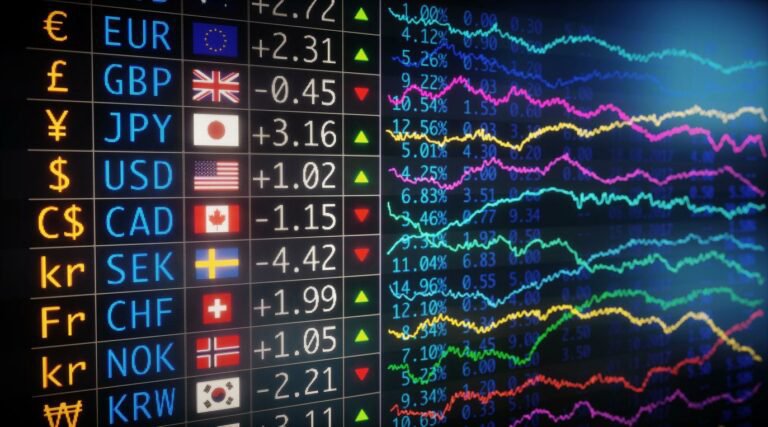
The foreign exchange market is the largest and most liquid financial market in the world. It involves trading global currencies in pairs (e.g., EUR/USD, GBP/JPY). Forex movements are driven by macroeconomic indicators, trade balances, interest rate differentials, and geopolitical events. While currency trading requires active management and poses high volatility, currencies are crucial for international trade and offer unique macro-trading opportunities.
Digital Assets and Cryptocurrencies
Digital assets, led by Bitcoin and smart-contract platforms, represent an emerging asset category defined by blockchain technology and decentralized consensus. Characterized by high price volatility, 24/7 trading cycles, and evolving regulatory environments, digital assets attract investors seeking high return potential alongside significant market risk.
The Risk and Return Spectrum of Major Asset Classes
Every investment category carries a distinct relationship between risk and prospective return. Generally, asset categories with higher potential returns require investors to accept higher levels of price volatility and potential capital loss.
Mapping these categories along a spectrum helps clarify their functional roles within a portfolio:
- Low Risk / Low Return: Cash equivalents and high-grade government bonds.
- Moderate Risk / Moderate Return: Investment-grade corporate bonds and multi-asset income funds.
- High Risk / High Return: Equities (large-cap to small-cap), real estate, and physical commodities.
- Very High Risk / Speculative: Emerging market equities, foreign exchange trading, and digital assets.
Understanding where each instrument sits on this spectrum prevents mismatches between an investor’s emotional risk tolerance and their actual portfolio volatility.
Portfolio Diversification and Market Correlation
The primary reason to understand major asset classes is to implement effective portfolio diversification. Diversification relies on the concept of market correlation—the degree to which two different assets move in relation to one another.
When assets have a positive correlation (+1.0), their prices move in the same direction at the same time. When assets have a negative correlation (-1.0) or low correlation (near 0), their price movements are independent or opposing.
By combining uncorrelated or negatively correlated assets—such as pairing growth equities with government bonds or physical gold—investors can smooth out overall portfolio returns. During periods when equity markets decline, defensive assets like bonds or safe-haven commodities may remain stable or appreciate, offsetting equity losses and reducing total portfolio drawdowns.
Asset Allocation vs. Security Selection
A crucial distinction in investment education is the difference between asset allocation and security selection.
- Asset Allocation: Deciding what percentage of a portfolio to distribute across broad investment categories (e.g., 60% equities, 30% fixed income, 10% alternatives).
- Security Selection: Deciding which specific stocks, bonds, or funds to buy within those allocated categories (e.g., selecting Company A over Company B).
Empirical financial research shows that broad asset allocation accounts for the vast majority of long-term portfolio return variability and risk control, while individual security selection plays a secondary role. Establishing the correct asset allocation framework is therefore far more critical to long-term success than attempting to pick individual winning stocks.
Determining Your Optimal Asset Allocation Mix
There is no single allocation formula suitable for every investor. Establishing the right balance requires evaluating three primary factors:
- Time Horizon: The length of time before you need to access your invested funds. Longer time horizons allow for higher exposure to volatile assets like equities, as there is time to recover from market downturns.
- Risk Tolerance: Your psychological ability to endure price fluctuations and portfolio drawdowns without making impulsive, emotionally driven trades.
- Financial Goals: The target rate of return needed to achieve specific financial milestones, balanced against the minimum risk required to achieve them.
As personal circumstances and market environments evolve, periodic rebalancing is necessary to restore a portfolio to its original target allocation weights.
Risk Awareness and Market Considerations
All financial trading and investing involve inherent risks, including the potential loss of principal. Past performance of any market, index, or individual asset is no guarantee of future returns. Market conditions change continuously, and leverage in instruments like forex or derivatives can amplify both gains and losses. Investors should evaluate their personal financial position, read all relevant disclosures, and consult qualified financial advisors before executing investment decisions.
Related Forex Resources
Continue learning with these related resources: